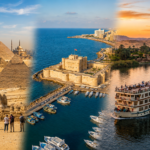
Egypt is home to one of the world’s oldest and most fascinating civilizations, making it a dream destination for history lovers and curious travelers alike. Across the country, magnificent temples, royal tombs, colossal statues, and ancient pyramids stand as remarkable reminders of a civilization that flourished for thousands of years. From the bustling streets of Cairo to the peaceful banks of the Nile in Upper Egypt, every landmark tells a unique story of powerful pharaohs, religious traditions, and extraordinary architectural achievements.
Whether you’re visiting Egypt for the first time or returning to explore more of its rich heritage, discovering its ancient landmarks is an unforgettable experience. Each site offers a glimpse into the country’s remarkable past while showcasing some of the greatest engineering and artistic accomplishments in human history.
The Great Pyramids of Giza remain Egypt’s most famous landmarks and one of the Seven Wonders of the Ancient World. Standing beside these colossal monuments is an unforgettable experience that continues to inspire millions of visitors every year. Nearby, the Great Sphinx watches over the Giza Plateau, adding another iconic symbol to Egypt’s extraordinary historical landscape.
South of Cairo lies Saqqara, home to the Step Pyramid of Djoser, the world’s oldest large-scale stone pyramid. This remarkable site represents an important milestone in ancient architecture and provides fascinating insight into the early development of pyramid construction. Nearby, the Bent Pyramid and the Red Pyramid at Dahshur reveal the evolution of pyramid design before the construction of the Great Pyramid.
In Luxor, the magnificent Karnak Temple Complex stands as one of the largest religious sites ever built. Its towering columns, grand courtyards, sacred lakes, and detailed hieroglyphs reflect the wealth and power of ancient Egypt. Just a short distance away, Luxor Temple impresses visitors with its elegant architecture and beautifully illuminated atmosphere during the evening.
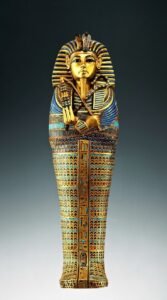
Crossing the Nile to Luxor’s West Bank leads travelers to the legendary Valley of the Kings, where many of Egypt’s greatest pharaohs were buried. Among its remarkable tombs is the famous Tomb of Tutankhamun, whose discovery remains one of archaeology’s greatest achievements. Nearby, the Valley of the Queens offers another fascinating burial site dedicated to queens and members of the royal family.
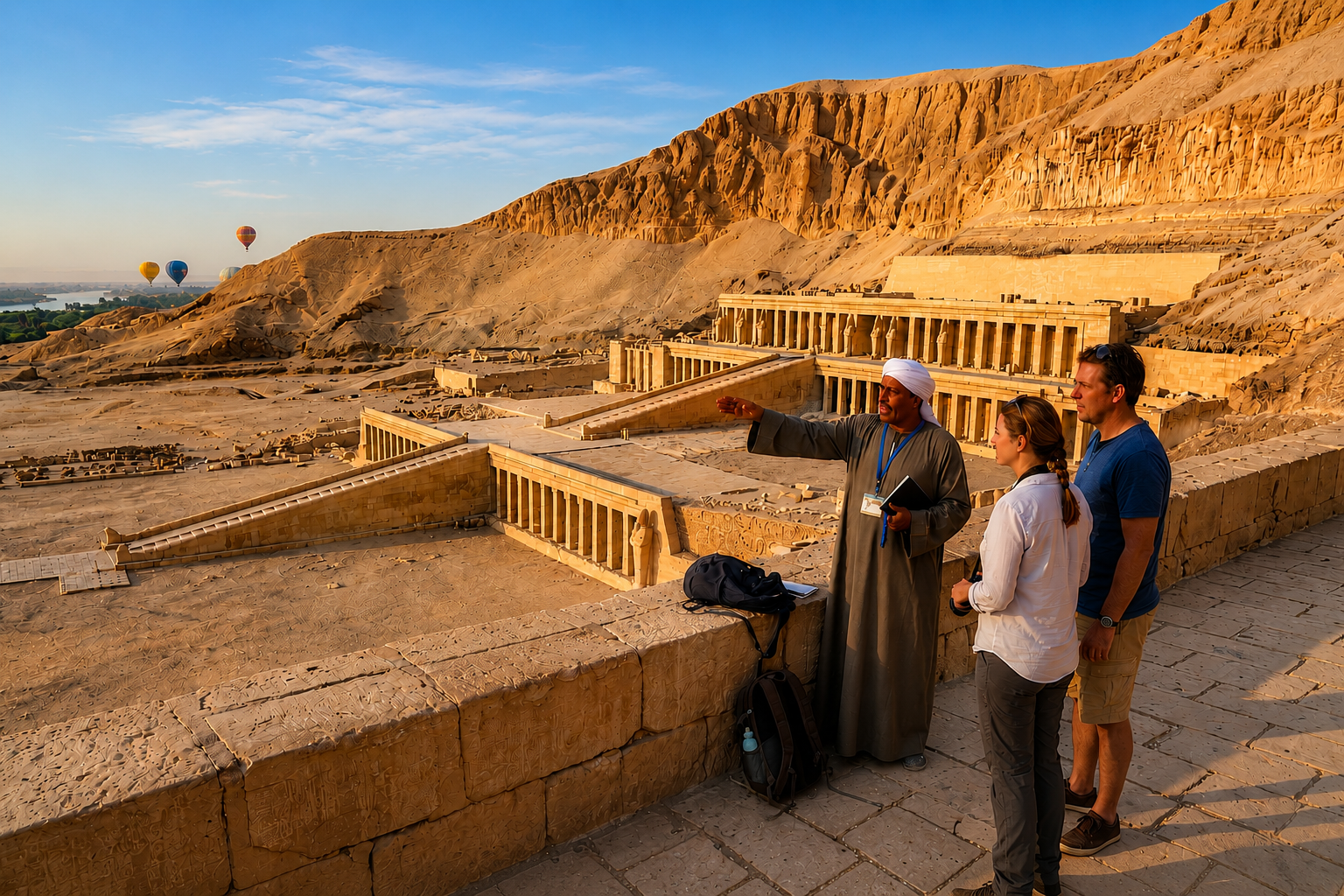
The Temple of Queen Hatshepsut is one of Egypt’s most distinctive monuments, rising dramatically against towering limestone cliffs. Its elegant terraces and impressive design honor one of ancient Egypt’s most successful female rulers. Not far away, the Colossi of Memnon continue to welcome visitors with two massive statues that have stood for over three thousand years.
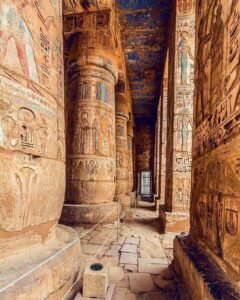
History enthusiasts should also explore Medinet Habu, one of Egypt’s best-preserved temples, famous for its colorful carvings and impressive walls. Deir el-Medina, the ancient village where the craftsmen who built the royal tombs once lived, provides a fascinating look into everyday life during the New Kingdom.
Further south, the Temple of Edfu is one of the finest preserved temples in Egypt. Dedicated to the falcon god Horus, its towering entrance, detailed reliefs, and massive halls make it one of the highlights of any Nile cruise. Continuing toward Aswan, the Temple of Kom Ombo stands uniquely along the Nile, dedicated to both Sobek, the crocodile god, and Horus the Elder.
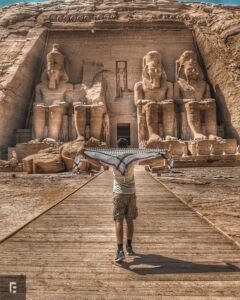
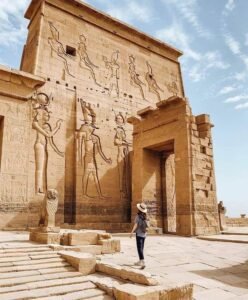
The beautiful Temple of Philae in Aswan is another must-visit landmark. Located on Agilkia Island and surrounded by the waters of the Nile, the temple is dedicated to the goddess Isis and is admired for its graceful architecture and peaceful setting. South of Aswan, the magnificent Abu Simbel Temples, built by Pharaoh Ramses II, rank among Egypt’s greatest archaeological masterpieces with their colossal statues carved directly into solid rock.
Travelers interested in lesser-known treasures should also visit the Temple of Dendera, renowned for its beautifully preserved ceilings and astronomical carvings, and the Temple of Abydos, famous for its exceptional reliefs and deep religious significance in ancient Egypt. Both sites provide extraordinary insights into Egypt’s spiritual and artistic traditions while receiving fewer visitors than the country’s most famous monuments.
The best time to explore Egypt’s ancient landmarks is between October and April, when temperatures are comfortable for sightseeing and outdoor activities. Comfortable walking shoes, lightweight clothing, sunscreen, and plenty of water are recommended for visiting archaeological sites. Hiring a professional Egyptologist guide can greatly enhance your experience by bringing thousands of years of history to life through fascinating stories and expert knowledge.
Egypt’s ancient landmarks are far more than historical monuments—they are living symbols of one of humanity’s greatest civilizations. From the timeless pyramids and majestic temples to royal tombs and sacred sanctuaries, each destination reveals another chapter in Egypt’s extraordinary past. Exploring these remarkable sites offers an unforgettable journey through history and remains one of the most rewarding travel experiences anywhere in the world.